
- This event has passed.
National Woman Astronomers Day
August 1, 2025
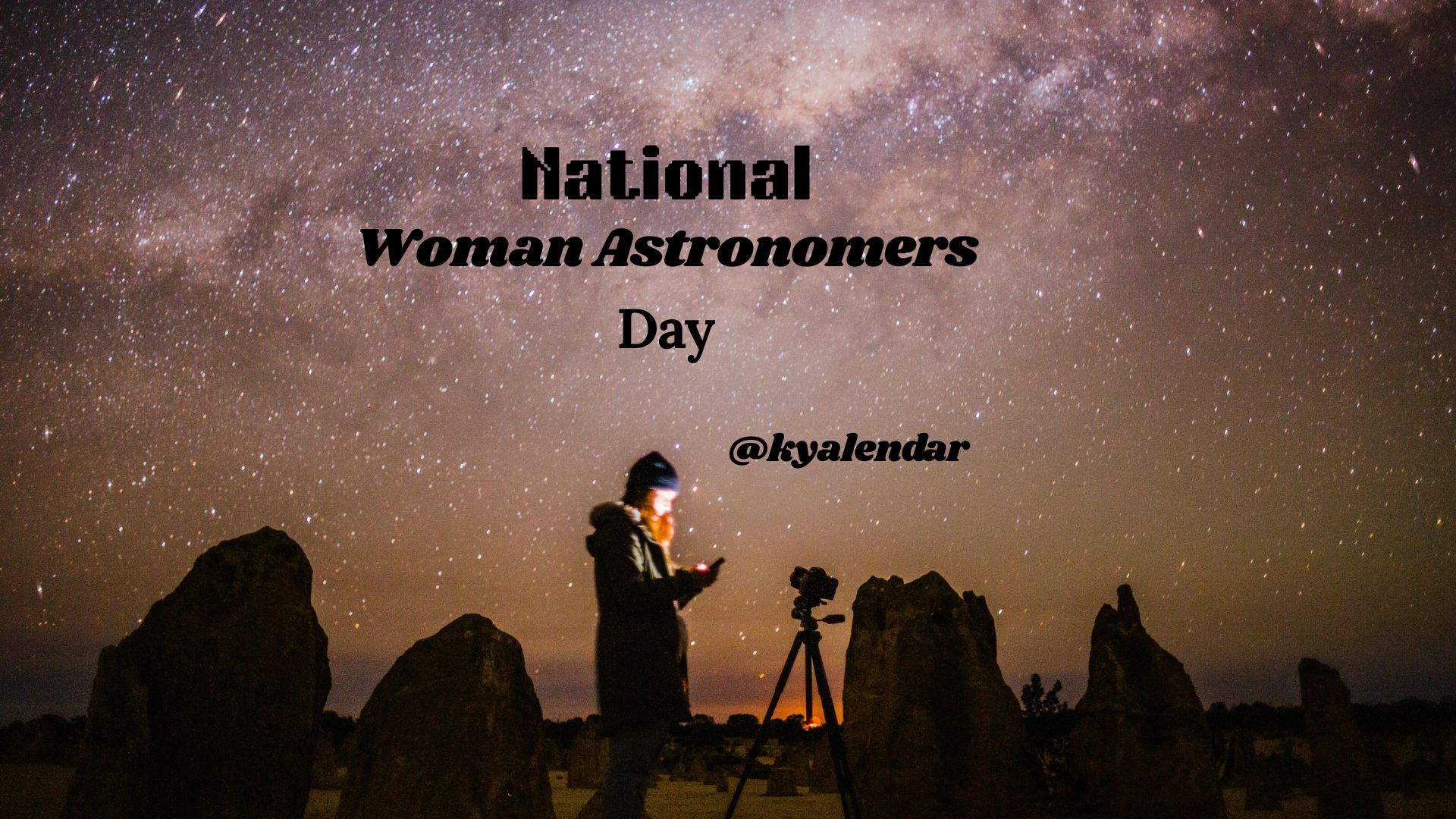
National Woman Astronomers Day is a day dedicated to celebrating the remarkable contributions of women in the field of astronomy. Throughout history, female astronomers have often worked in the shadows, receiving far less recognition than their male counterparts. This day offers an opportunity to honour their achievements, bring awareness to the challenges they’ve faced, and inspire future generations of women to pursue careers in astronomy and other sciences.
The Role of Women in Astronomy
Women have been making groundbreaking contributions to the study of the cosmos for centuries, although their work has frequently been overshadowed by the more prominent male figures in the field. In the early days, women were often relegated to roles as “computers” – performing complex mathematical calculations by hand – while men took the more visible positions. However, these early women mathematicians and scientists laid the foundation for many of the discoveries we know today.
One of the most famous early female astronomers was Caroline Herschel, who discovered numerous comets and worked alongside her brother, the renowned astronomer William Herschel. Her persistence in the male-dominated field paved the way for other women in science. Fast forward to the 20th century, and you’ll find figures like Henrietta Swan Leavitt, who discovered the relationship between the brightness of Cepheid variable stars and their distance from Earth, a discovery that was instrumental in determining the size of our galaxy and the universe.
More recently, Vera Rubin is celebrated for her work in dark matter, a mysterious substance that makes up the majority of the universe’s mass. Rubin’s research was critical in proving the existence of dark matter, forever altering our understanding of the cosmos.
Challenges Faced by Women in Astronomy
Women astronomers have long had to contend with the gender biases and discrimination that pervade many scientific fields. Historically, their work was often uncredited, or their achievements were attributed to their male colleagues. For example, Jocelyn Bell Burnell discovered pulsars in 1967, but it was her male supervisor who received the Nobel Prize for the discovery.
In addition to this systemic bias, women have had to fight for access to educational opportunities, research funding, and professional advancement in ways that their male counterparts have not. Despite these challenges, women astronomers have continued to push boundaries and make groundbreaking discoveries that have shaped our understanding of the universe.
Celebrating National Woman Astronomers Day
National Woman Astronomers Day is not only a time to reflect on the past contributions of female astronomers but also a day to encourage more girls and women to pursue careers in astronomy. Events on this day might include lectures, public stargazing events, and educational programs aimed at highlighting the work of women astronomers.
Organisations and institutions around the world may use the occasion to feature women in science and promote their achievements. Many universities and observatories host special events or talks given by prominent women astronomers, providing a platform for these scientists to share their experiences and inspire others.
Additionally, schools and educational bodies often use National Woman Astronomers Day to introduce young girls to the field of astronomy, fostering interest and passion for space science from an early age. This is crucial, as inspiring the next generation of female scientists is key to continuing the legacy of women in astronomy.
Inspiring the Future
One of the main goals of National Woman Astronomers Day is to increase the visibility of women in science, encouraging the idea that astronomy and other scientific fields are not just for men. By showcasing the success stories of female astronomers and emphasising the value of their work, the hope is that more young women will feel empowered to pursue studies and careers in astronomy.
With the rise of initiatives aimed at promoting gender equality in STEM (Science, Technology, Engineering, and Mathematics), there are more opportunities than ever for women to succeed in fields like astronomy. Mentorship programmes, scholarships, and other resources are becoming increasingly available to support women in their scientific pursuits, breaking down barriers and creating a more inclusive environment.
The Importance of Gender Diversity in Science
Gender diversity in science, particularly in astronomy, is critical for many reasons. Diverse perspectives lead to more creative and innovative solutions to problems. In astronomy, where we are constantly striving to understand the mysteries of the universe, having a wide range of viewpoints and approaches can lead to new breakthroughs and discoveries.
Moreover, gender diversity helps to ensure that the field of astronomy is accessible to all, regardless of background or identity. By supporting women in astronomy, we are creating a more equitable and inclusive scientific community, where everyone has the opportunity to contribute and succeed.
Conclusion
National Woman Astronomers Day is a celebration of the trailblazing women who have shaped our understanding of the universe, despite the many obstacles they have faced. It is a day to honour their achievements, raise awareness of the challenges that still exist, and inspire future generations of women to pursue careers in astronomy. By recognising the importance of gender diversity in science, we are taking a step towards a more inclusive and innovative future in astronomy and beyond.