
- This event has passed.
Raksha Bandhan
August 9, 2025
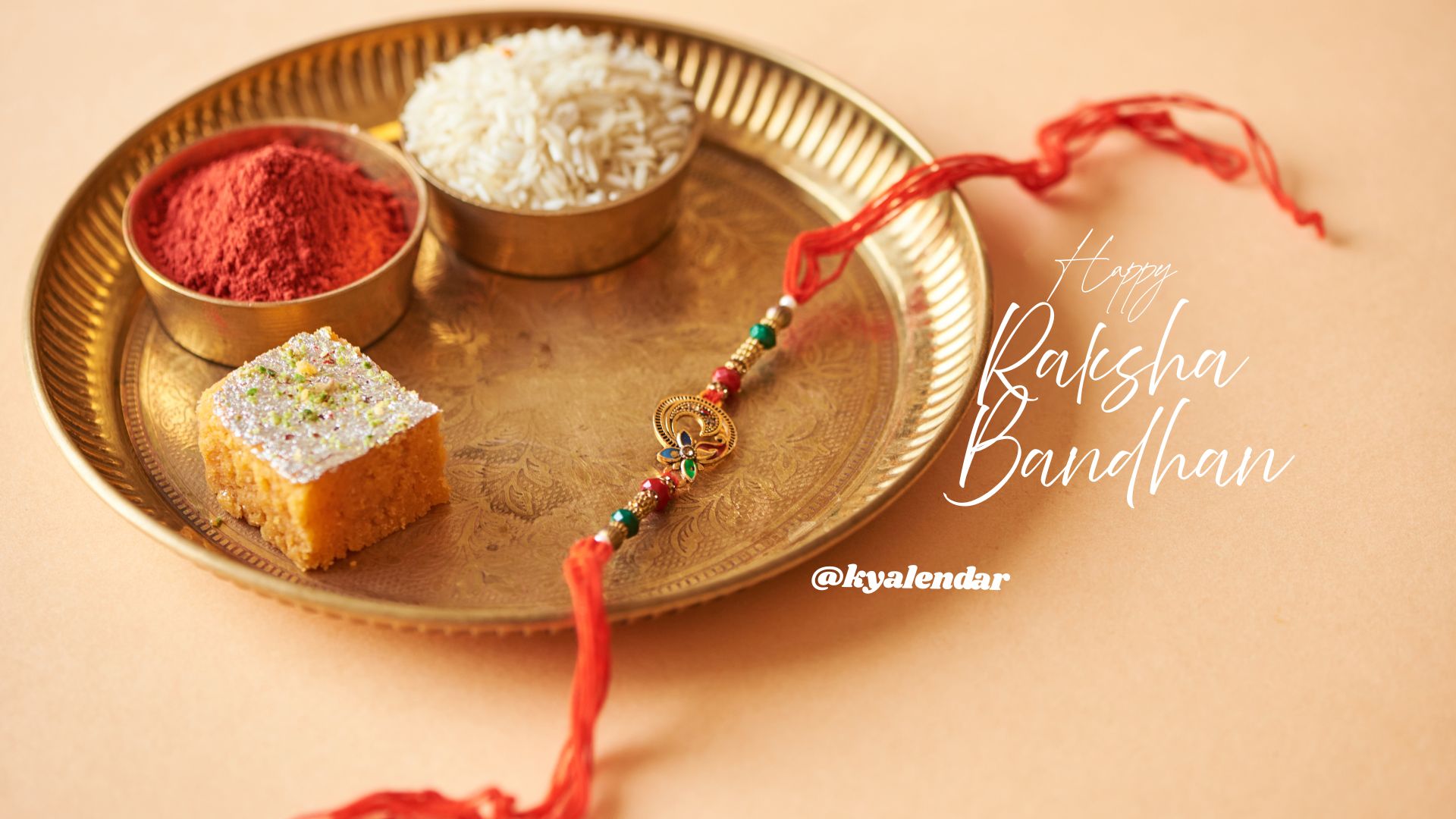
Raksha Bandhan is a beautiful festival rooted in the traditions of love, protection, and familial bonding between brothers and sisters. Celebrated widely across India and in other parts of the world where Indian culture is embraced, Raksha Bandhan falls on the full moon day in the Hindu month of Shravan (usually in August). The name itself translates to “bond of protection,” and the day revolves around the symbolic act of a sister tying a rakhi, a sacred thread, around her brother’s wrist as a gesture of love and her hope for his safety and prosperity. In return, the brother pledges to protect his sister throughout his life and often presents her with a gift as a token of affection.
Historical and Mythological Origins
The significance of Raksha Bandhan can be traced back to ancient Hindu mythology, with stories highlighting the bond between siblings or the act of a protective gesture. One well-known legend is that of Draupadi and Krishna in the epic Mahabharata. During a critical moment, Draupadi tore a piece of her sari and tied it around Krishna’s bleeding finger to prevent it from bleeding further. Touched by her gesture, Krishna vowed to protect her whenever she needed him, which he later fulfilled during the episode of her public disrobing.
Another legend surrounds Queen Karnavati of Mewar and the Mughal Emperor Humayun. In a time of impending conflict, Queen Karnavati, realising she was vulnerable, sent a rakhi to Humayun. Although they were not siblings by blood, Humayun honoured her call for protection and changed his course to come to her aid. Such stories highlight the festival’s universal theme of unconditional support and honour beyond biological ties.
The Ritual of Raksha Bandhan
The main ritual of Raksha Bandhan is simple yet deeply symbolic. The sister ties a rakhi on her brother’s wrist, which is often made of colourful threads, beads, and sometimes decorated with charms or other ornaments. Before tying the rakhi, she performs an aarti (a small prayer ritual) for her brother, applies a tilak (a mark on the forehead) as a blessing, and prays for his health, happiness, and longevity. After the rakhi is tied, the brother offers a gift, expressing his gratitude and affection for his sister.
In modern celebrations, the rakhi has evolved into different styles, ranging from intricate designer pieces to simple threads, but its symbolism remains unchanged. Sisters may also tie rakhis to close friends, cousins, or even neighbours, demonstrating that the bond of protection and love is not limited by strict definitions of family.
Contemporary Significance and Changing Traditions
In today’s world, Raksha Bandhan is not only a festival for siblings but has also come to symbolise love and respect among friends, extended family members, and even as a pledge to protect the environment and animals. It serves as an opportunity for families to come together, exchange sweets, and share meals, thereby reinforcing their connections.
Moreover, as families are often separated by distance, it has become common for sisters to send rakhis by post or to celebrate through virtual platforms. Many organisations and communities even observe Raksha Bandhan as a broader festival of solidarity, with people tying rakhis as a gesture of peace, unity, and respect among communities.
The Joy of Exchange and Togetherness
Food and gifts are another cherished part of Raksha Bandhan. Traditional Indian sweets like laddus, barfis, and rasgullas are exchanged, adding sweetness to the occasion. Brothers often take time to thoughtfully select gifts that would delight their sisters, from jewellery and clothing to books or anything meaningful to their bond. These exchanges are symbolic, yet they bring an element of fun and surprise, celebrating the joy of giving and receiving.
For many, Raksha Bandhan is also a day of reflection on the relationships that support and shape us. It’s a reminder that bonds can be nurtured through small acts of kindness and thoughtfulness. In essence, Raksha Bandhan provides an opportunity to honour the timeless values of familial support, gratitude, and mutual respect that bring us closer to those we care about.
Embracing the Essence of Raksha Bandhan in Today’s World
Raksha Bandhan carries values that resonate universally—commitment to one another’s wellbeing, the importance of trust, and the willingness to support each other unconditionally. While its forms may have changed over time, the festival continues to inspire connections that go beyond blood relations and is a testament to the human spirit of compassion and solidarity.