
- This event has passed.
Rain Day
July 29, 2025
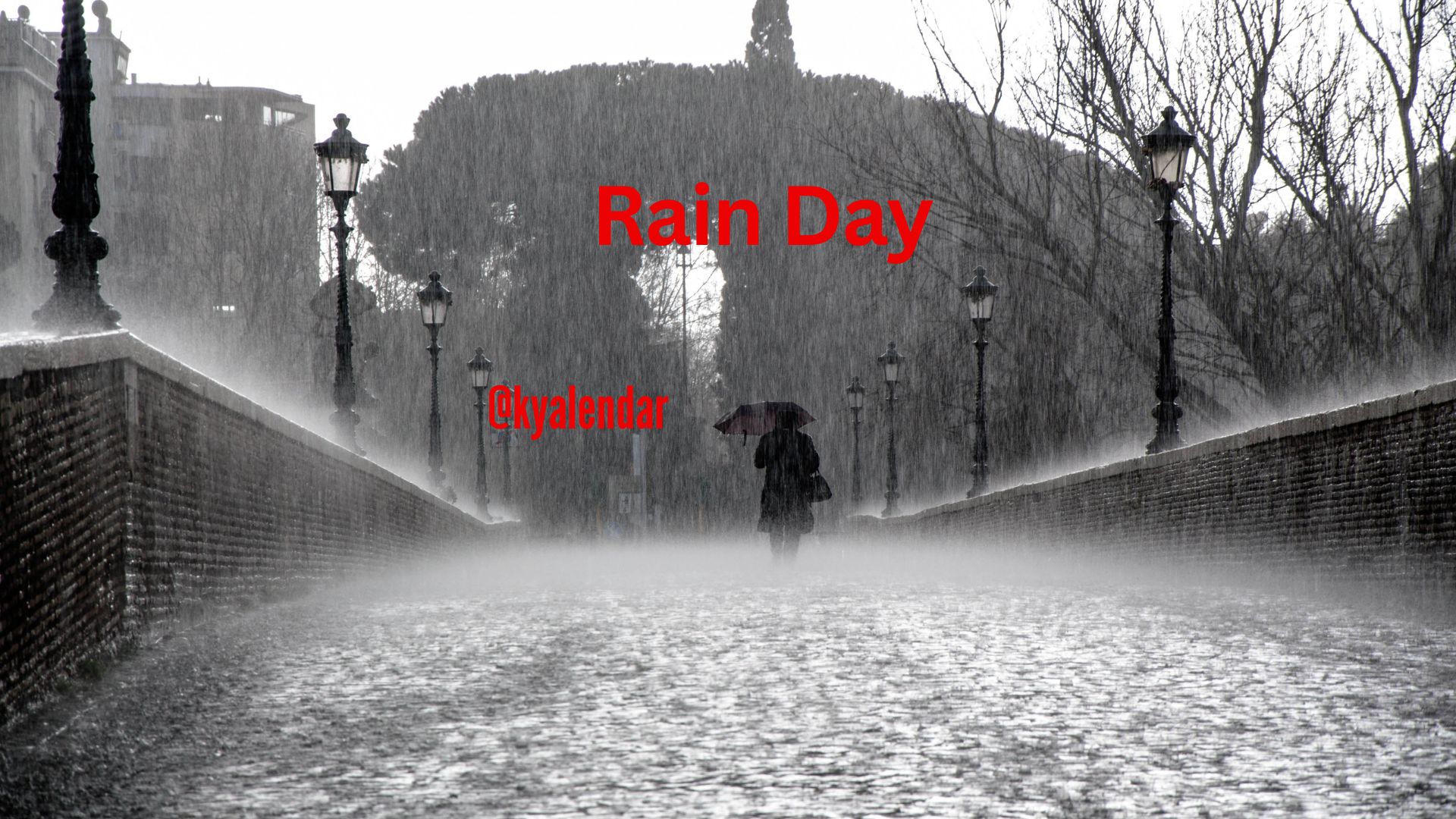
Rain Day, celebrated annually on July 29th, is a whimsical and light-hearted observance that encourages people to embrace the beauty and necessity of rain. While many may view rain as a mere inconvenience, this day invites individuals to appreciate the vital role that rain plays in our ecosystem, agriculture, and daily lives. From its historical significance to the myriad ways we can celebrate, Rain Day serves as a reminder to find joy in even the wettest of days.
The Importance of Rain
Rain is essential for the Earth’s ecosystem, providing water for plants, animals, and humans. It is a crucial component of the water cycle, which helps sustain life by replenishing freshwater supplies. Without rain, crops would fail, leading to food shortages and economic challenges. Additionally, rain helps maintain the natural balance of the environment, supporting habitats and biodiversity.
Historical Background
The origin of Rain Day dates back to the early 19th century, specifically to a small town in Pennsylvania, USA, called Waynesburg. The story goes that on July 29, 1887, it rained in Waynesburg, which was significant for the community as they were experiencing a drought. The townspeople celebrated the rain, and thus, the tradition began. Over the years, this celebration evolved into a day dedicated to honouring rain and its contributions to our world.
How to Celebrate Rain Day
- Appreciate Nature: Take a moment to step outside and enjoy the fresh, earthy smell that accompanies rain. Listen to the soothing sound of raindrops falling on rooftops and leaves. Consider going for a walk or hike in a nearby park to observe how rain nourishes the plants and animals around you.
- Host a Rainy Day Party: If the weather permits, gather friends and family for a fun indoor gathering. You could play board games, watch movies, or even bake some comforting treats together. Emphasise the joy of spending time indoors while listening to the rain patter against the windows.
- Create Art Inspired by Rain: Rain has long been a muse for artists and poets alike. Celebrate by creating your own art inspired by rain. You could paint, draw, or write poetry that captures the essence of rainy days. Use watercolour paints to mimic the fluidity of rain or compose a piece that reflects your feelings about the weather.
- Explore Rain-Themed Recipes: Celebrate Rain Day with comfort food that complements the weather. Think warm soups, hot chocolate, or baked goods that provide a sense of warmth and coziness. You could even create a themed menu inspired by the colours and textures of rain.
- Educate Others: Take the opportunity to raise awareness about the importance of rain in our ecosystem. You could organise a small event or discussion to inform others about water conservation, the impact of climate change on rainfall patterns, and the importance of preserving our natural resources.
- Capture the Moment: If you enjoy photography, take your camera out and capture the beauty of rain. Photograph droplets on leaves, puddles on the pavement, or the way light filters through clouds. These images can serve as a reminder of the beauty that rain brings to our world.
The Science of Rain
Understanding the science behind rain can deepen our appreciation for this natural phenomenon. Rain forms when water vapour in the atmosphere cools and condenses into droplets. These droplets gather together and grow heavy enough to fall to the ground due to gravity. The process is influenced by various factors, including temperature, humidity, and atmospheric pressure.
Rainfall can vary significantly across different regions. Some areas experience frequent, light showers, while others may have intense downpours. This variation is influenced by geographical features, such as mountains and bodies of water, as well as climatic conditions.
The Cultural Significance of Rain
Rain has been celebrated in various cultures throughout history. It often symbolizes fertility, renewal, and cleansing. In many traditions, rain is seen as a blessing that brings life and prosperity. Festivals and rituals centred around rain can be found in cultures worldwide, reflecting the universal importance of this natural resource.
For instance, in Hinduism, the festival of Teej is celebrated to honour the arrival of the monsoon season, with prayers and celebrations focused on the rejuvenation that rain brings. Similarly, in African cultures, rain dances are performed to invoke rainfall, emphasising the reliance on this natural element for agricultural success.
Conclusion
Rain Day is more than just a day to acknowledge wet weather; it is an opportunity to celebrate the essential role that rain plays in our lives and the environment. By embracing the beauty and significance of rain, we can foster a deeper appreciation for nature and its cycles. So, on July 29th, take a moment to step outside, enjoy the refreshing rain, and reflect on its importance in sustaining life on Earth. Whether you choose to celebrate with friends, create art, or simply appreciate the moment, let Rain Day remind you that every drop counts.