
- This event has passed.
National Hawaii Day
July 5, 2025
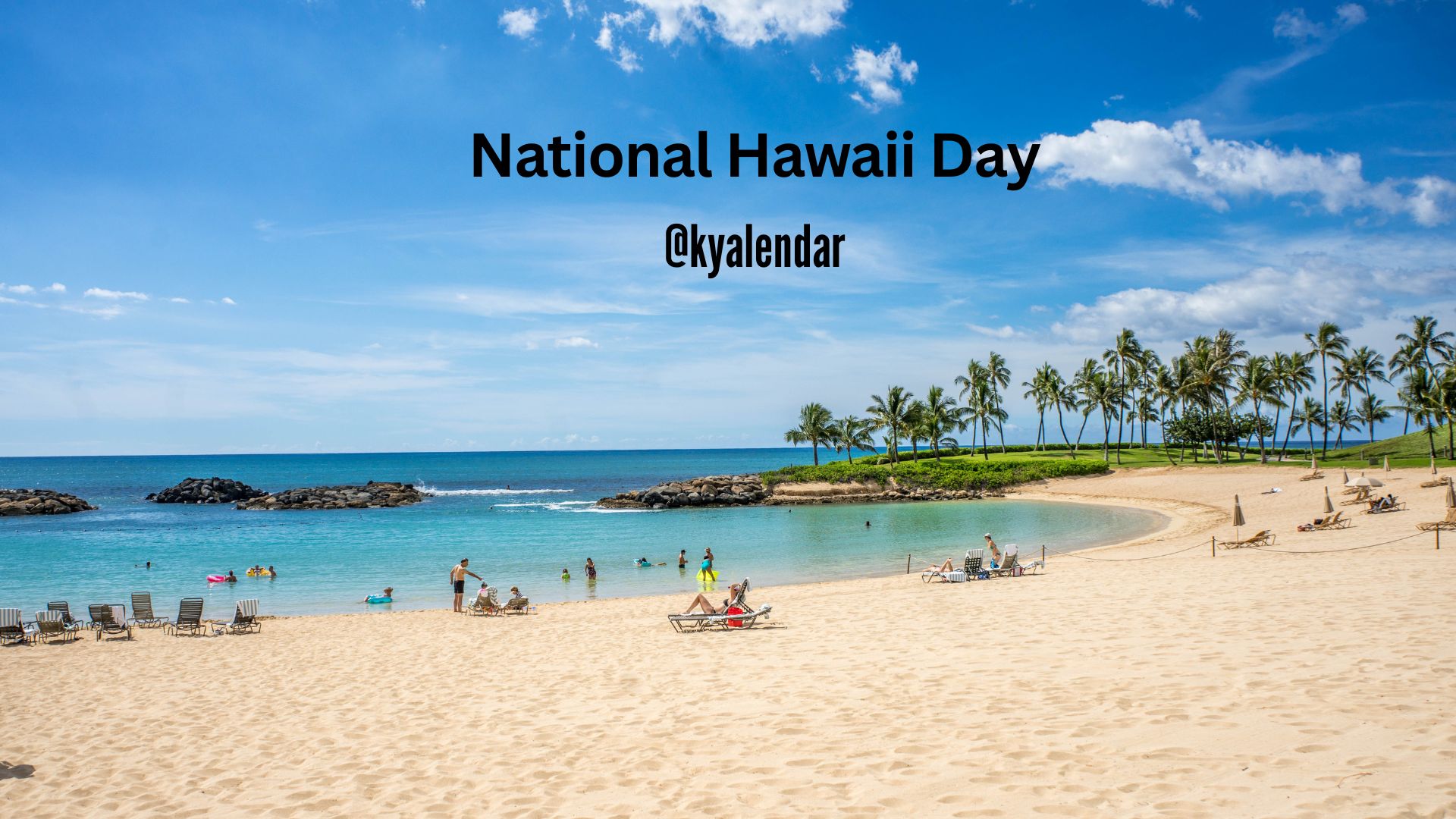
National Hawaii Day is a special occasion dedicated to celebrating the rich culture, history, and natural beauty of the Aloha State. Observed annually, this day invites people from all over to learn about Hawaii’s unique heritage, its welcoming spirit, and the enchanting landscapes that make it one of the most beloved destinations in the world.
The Origins of National Hawaii Day
Though relatively new as a recognised day of celebration, National Hawaii Day honours the 50th state of the United States, which was officially admitted into the union on 21 August 1959. Despite its status as the last state to join, Hawaii holds a distinct place in the hearts of many. Known for its stunning islands, vibrant traditions, and an ethos of “Aloha”—a word that means both hello and goodbye but also embodies love, peace, and compassion—Hawaii’s influence goes far beyond its geographic size.
National Hawaii Day serves as a reminder of Hawaii’s contributions to the world, including its unique customs, its role in history, and the environmental treasures it preserves.
The Islands of Hawaii
Hawaii is an archipelago of volcanic islands situated in the Pacific Ocean. The main islands are Hawaii (commonly referred to as the Big Island), Oahu, Maui, Kauai, Molokai, Lanai, Niihau, and Kahoolawe. Each island has its own personality, landscapes, and attractions, making Hawaii a diverse and fascinating place to explore.
- Hawaii (The Big Island): Known for its active volcanoes, particularly Kilauea, the Big Island is home to Hawaii Volcanoes National Park, where visitors can witness the power of nature firsthand. The island also features black sand beaches, waterfalls, and lush rainforests.
- Oahu: The most populous of the islands, Oahu is home to the state capital, Honolulu, and the famous Waikiki Beach. Oahu also holds significant historical importance as the location of Pearl Harbor, a pivotal site in World War II history.
- Maui: Known for its scenic beauty and outdoor activities, Maui boasts the famous Road to Hana, Haleakalā National Park, and stunning beaches. It’s also a popular spot for whale watching during the winter months.
- Kauai: Nicknamed the “Garden Isle,” Kauai is a nature lover’s paradise, with its dramatic cliffs, lush valleys, and stunning waterfalls. The island is famous for Waimea Canyon, often referred to as the “Grand Canyon of the Pacific.”
- Molokai and Lanai: These quieter, less-developed islands offer a glimpse into Hawaii’s past, with their unspoiled landscapes and strong connections to traditional Hawaiian culture.
Each island contributes something unique to Hawaii’s overall appeal, whether it’s the vibrant city life of Honolulu or the serene, untouched landscapes of Kauai and Molokai.
A Rich Tapestry of Culture and Traditions
Hawaiian culture is a blend of native Hawaiian customs, Polynesian influences, and the contributions of immigrants from around the world. It is characterised by its deep respect for nature, spirituality, and community, all of which are rooted in the principle of “Aloha.”
- Hula and Music: One of Hawaii’s most recognisable cultural practices is the hula, a traditional dance that tells stories through graceful movements and gestures. Hula is often accompanied by the sounds of ukulele, drums, and chanting. Hawaiian music, particularly the slack-key guitar and ukulele, also holds a special place in the islands’ identity.
- Lei Giving: The giving of a lei, a garland of flowers or other materials, symbolises affection, respect, and honour. It’s a beautiful tradition often associated with celebrations and special occasions, and it’s not uncommon to be greeted with a lei upon arriving in Hawaii.
- Language: Hawaiian, alongside English, is an official language of the state. The Hawaiian alphabet consists of only 13 letters, and many of the island’s place names and traditions are still referred to in Hawaiian. The word “Aloha” is perhaps the most well-known, embodying a spirit of love, kindness, and connection.
- Luau: The traditional Hawaiian feast, known as a luau, is a cultural event filled with music, dance, and food. The menu often includes kalua pig, cooked in an underground oven (imu), poi (a paste made from taro), and poke (a raw fish salad).
Historical Significance
Hawaii has a rich and often complex history, from its early Polynesian settlers to its role in global conflicts. In the late 18th century, Captain James Cook became the first European to visit Hawaii, and the islands soon became a major hub for trade and commerce in the Pacific.
Hawaii was a kingdom until its overthrow in 1893, after which it was annexed by the United States in 1898. The attack on Pearl Harbor in 1941 marked a critical moment in both Hawaiian and world history, drawing the U.S. into World War II. Following the war, Hawaii became a U.S. state in 1959.
Today, Hawaii’s history is preserved and honoured through its landmarks, museums, and cultural practices. National Hawaii Day offers an opportunity to reflect on the state’s past and appreciate its contributions to the broader world.
Nature’s Bounty
Hawaii is renowned for its natural beauty, with its tropical climate, diverse ecosystems, and stunning landscapes. From volcanic craters and coral reefs to rainforests and waterfalls, Hawaii’s environment is both diverse and fragile.
The islands are home to many endangered species and unique flora and fauna that cannot be found anywhere else in the world. Hawaii’s native forests, marine life, and ecosystems are closely protected, and the state plays a crucial role in global conservation efforts.
Visiting Hawaii offers an abundance of outdoor activities, including hiking, surfing, snorkelling, and exploring its national parks. National Hawaii Day is an ideal time to celebrate the natural beauty of these islands and to reflect on the importance of preserving their environment for future generations.
Conclusion
National Hawaii Day is a day to appreciate all that the Aloha State has to offer, from its rich cultural traditions and history to its awe-inspiring natural beauty. Whether you’re a resident of Hawaii, a frequent visitor, or simply someone who admires the islands from afar, this day is a perfect opportunity to immerse yourself in the spirit of Aloha, learn about the unique heritage of Hawaii, and celebrate everything that makes this state so special. From the vibrant hula to the towering volcanoes, Hawaii’s charm is undeniable, and National Hawaii Day invites us all to celebrate its many wonders.