
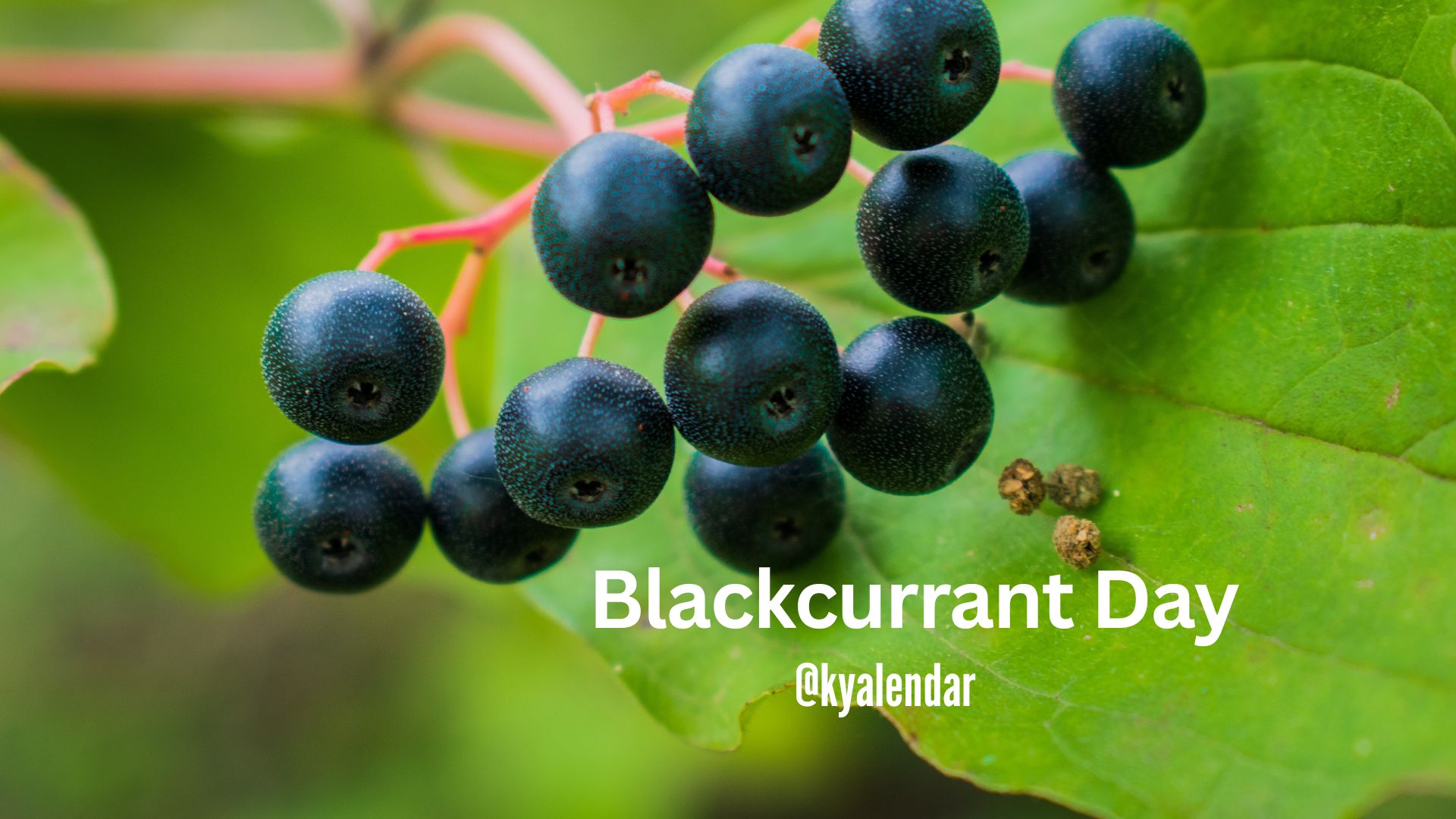
Blackcurrant Day is a celebration of a small yet remarkably distinctive fruit that has played an important role in kitchens, gardens, and food traditions for generations. Known for its deep purple colour and bold, tangy flavour, the blackcurrant is both versatile and memorable. This day is dedicated to appreciating its taste, its uses, and its place in everyday life.
Blackcurrants are grown in cooler climates and thrive in well-tended gardens and farms. Unlike sweeter berries, they have a sharpness that makes them stand out. Their flavour is rich and complex, often described as earthy and slightly tart, which is why they are rarely eaten raw. Instead, they shine when cooked or combined with sugar, releasing a depth of taste that is instantly recognisable.
One of the most familiar uses of blackcurrants is in drinks. From cordials and juices to warm winter beverages, blackcurrants have long been valued for their strong flavour and comforting qualities. They are equally popular in desserts, where they are used in jams, jellies, pies, crumbles, and sauces. Their intense colour adds visual appeal, while their flavour balances sweetness with a refreshing sharp edge.
Blackcurrant Day also celebrates the fruit’s connection to home cooking and seasonal eating. For many people, blackcurrants bring back memories of summer harvests, homemade preserves, and family recipes passed down over time. The process of picking, cooking, and storing blackcurrants reflects a slower, more thoughtful approach to food that values freshness and tradition.
Beyond their culinary appeal, blackcurrants are admired for their natural qualities. They have long been associated with nourishment and have been a valued ingredient in households looking to make the most of seasonal produce. Blackcurrant Day encourages an appreciation of how such small fruits can offer both flavour and substance, proving that size does not limit impact.
The day is also an opportunity to explore creativity in the kitchen. Blackcurrants pair well with a wide range of ingredients, from apples and pears to chocolate and spices. They can be used to create modern dishes as easily as traditional ones, making them relevant to both classic and contemporary cooking styles. Whether used in baking, sauces, or drinks, they offer endless possibilities.
Celebrating Blackcurrant Day can be as simple as enjoying a blackcurrant-flavoured treat or trying a new recipe that highlights the fruit. It is a moment to slow down and savour a flavour that is bold, distinctive, and deeply rooted in food culture.
Ultimately, Blackcurrant Day is about recognising the value of a fruit that has quietly enriched many meals and memories. It honours the blackcurrant’s unique character, its versatility, and its enduring place in everyday cooking. Through this celebration, the blackcurrant is appreciated not just as an ingredient, but as a symbol of tradition, flavour, and simple enjoyment.