
- This event has passed.
Nunavut Day
July 9, 2025
The History of Nunavut
The formation of Nunavut was the result of decades of negotiation between the Canadian government and the Inuit people. Before Nunavut’s creation, the region was part of the Northwest Territories, but the Inuit, who are the indigenous people of the region, desired more autonomy and control over their land. This led to the Nunavut Land Claims Agreement, which was the largest land claim settlement in Canadian history when it was signed in 1993. This agreement granted the Inuit people control over large portions of land and natural resources, as well as the right to self-government.
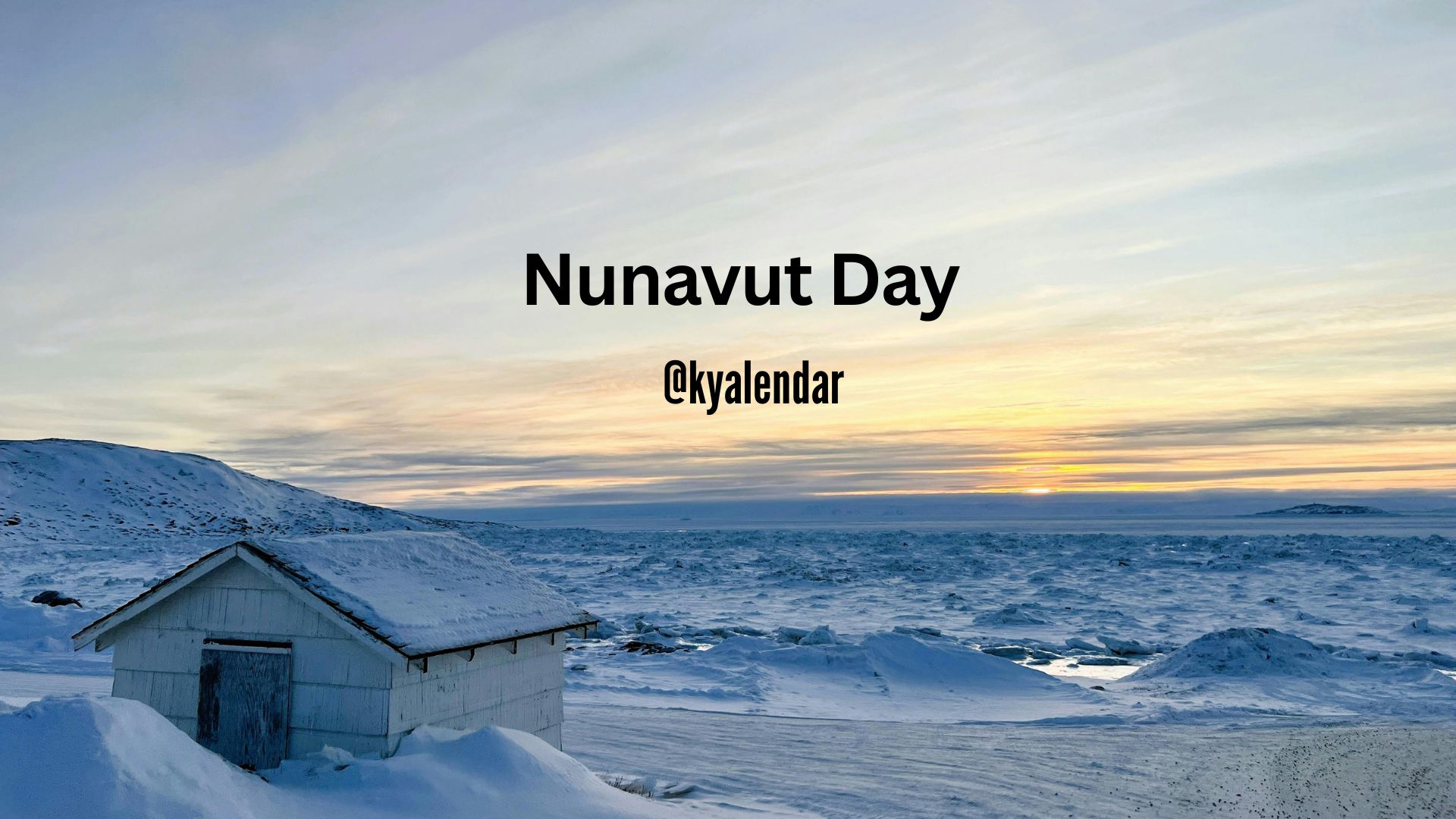
On 1st April 1999, Nunavut officially separated from the Northwest Territories, creating a new province that covers about one-fifth of Canada’s total landmass. This vast, sparsely populated region is known for its stunning natural beauty, which includes Arctic tundra, dramatic fjords, and ice-covered landscapes. Nunavut Day, celebrated on 9th July, commemorates the day in 1993 when the Nunavut Land Claims Agreement Act was passed, paving the way for the creation of the territory.
Cultural Significance
Nunavut Day is a time to celebrate the rich cultural heritage of the Inuit people. Inuit culture is deeply connected to the land, with traditional practices such as hunting, fishing, and carving playing an integral role in daily life. On this day, events and activities highlight Inuit traditions, including throat singing, drum dancing, and the crafting of beautiful stone and bone sculptures.
The Inuit have a profound spiritual connection to the land, and this is reflected in their art and storytelling. Many of these cultural practices are shared and celebrated on Nunavut Day, offering a chance for both Inuit and non-Inuit residents to come together in appreciation of the territory’s unique identity.
The day also serves as a reminder of the Inuit people’s resilience and determination in preserving their way of life despite the challenges posed by colonisation, modernisation, and climate change. The establishment of Nunavut gave the Inuit a platform to govern their land and protect their cultural values, ensuring that future generations can maintain their connection to their ancestors and traditions.
Celebrations and Traditions
In towns and communities across Nunavut, Nunavut Day is marked by various celebrations that honour the Inuit way of life. The day often features community feasts, where traditional Inuit foods such as muktuk (whale blubber), arctic char, and caribou are served. These meals are a way of reconnecting with the land and sharing the bounty that the Arctic provides.
In addition to feasts, there are cultural performances and events where Inuit artists and performers showcase traditional songs, dances, and artwork. Throat singing, an ancient form of vocal music performed primarily by Inuit women, is a highlight of the day’s festivities, as are demonstrations of drum dancing, a powerful form of storytelling through rhythm and movement.
Nunavut Day is also an occasion for outdoor activities that celebrate the natural beauty of the territory. From dog sledding to kayaking in the Arctic waters, the day encourages people to engage with the landscape in meaningful ways. Educational events and workshops are often held, focusing on the history of the land claims process, Inuit rights, and environmental stewardship in the Arctic.
The Importance of Nunavut’s Creation
The creation of Nunavut was a historic achievement in the recognition of Indigenous rights in Canada. It was a major step forward in addressing the historical injustices faced by the Inuit people, whose land and culture had been threatened by colonisation and the expansion of European settlers in the north.
Nunavut was founded on the principle of self-determination, granting the Inuit people control over their land and resources. This has allowed the territory to pursue policies that are aligned with Inuit values, particularly in areas such as environmental conservation, education, and language preservation. In Nunavut, the Inuktitut language is one of the official languages alongside English and French, reflecting the commitment to preserving the Inuit language and culture.
The creation of the territory has also helped to draw attention to the unique challenges faced by northern communities, including the impacts of climate change, which is disproportionately affecting the Arctic. As the ice melts and temperatures rise, the traditional ways of life in Nunavut are under threat, making environmental conservation a key focus of governance in the region.
Challenges and Opportunities
While Nunavut Day is a celebration of cultural pride and autonomy, it is also a time to reflect on the challenges that still face the territory. Due to its remote location and harsh climate, Nunavut struggles with issues such as housing shortages, high food costs, and limited access to healthcare. These challenges are compounded by the territory’s rapidly growing population, which is placing strain on its infrastructure.
Despite these difficulties, there are also significant opportunities for growth and development in Nunavut. The territory is rich in natural resources, including minerals and fish, and there is potential for economic expansion through industries such as tourism, mining, and renewable energy. At the same time, Nunavut is working to ensure that economic development is sustainable and does not come at the expense of the environment or the traditional ways of life of its people.
Modern-Day Reflections
For many, Nunavut Day is a time to reflect on the importance of self-governance and the progress that has been made since the territory’s creation. It serves as a reminder of the power of Indigenous communities to fight for their rights and to shape their own future. The day also highlights the need for continued efforts to address social and economic inequalities in the region, ensuring that all residents of Nunavut can thrive.
As Nunavut moves forward, the spirit of Nunavut Day lives on in the hearts of its people, embodying the resilience, strength, and deep connection to the land that defines the territory. The holiday not only celebrates the past but also looks towards a future where the Inuit culture and way of life continue to flourish.
Conclusion
Nunavut Day is a significant celebration in Canada, honouring the creation of the territory and the rich cultural heritage of the Inuit people. It is a day of reflection, celebration, and unity, bringing together communities to celebrate their shared history and look forward to the future. From traditional feasts to cultural performances, Nunavut Day is a vibrant expression of the resilience and strength of the Inuit people, a reminder of their deep connection to the land, and a testament to the importance of self-governance and Indigenous rights.
Details
- Date: July 9, 2025