
- This event has passed.
First Republic Day in Armenia
May 28, 2025
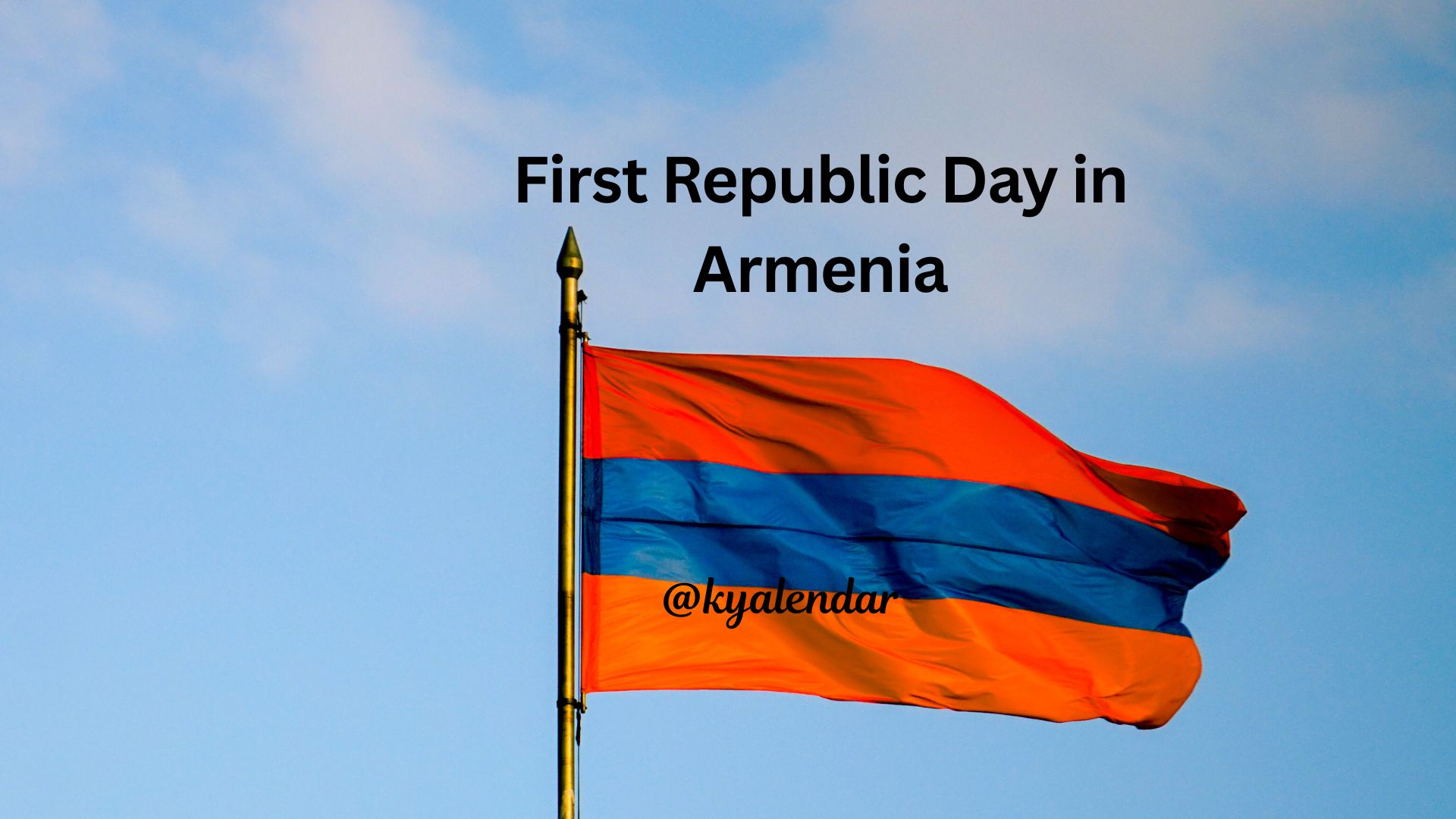
First Republic Day in Armenia is a national holiday that commemorates a pivotal moment in the country’s history – the establishment of the First Republic of Armenia on 28th May 1918. It marks the beginning of Armenia’s journey as an independent state after centuries of foreign domination and reflects the resilience and spirit of the Armenian people. Every year, Armenians across the world come together to celebrate this significant occasion, honouring their ancestors’ courage and sacrifices that laid the foundation for modern Armenia.
Historical Context
The early 20th century was a period of great upheaval for Armenia. For centuries, the region had been caught between the competing interests of larger empires, such as the Ottoman Empire, Persia, and Russia. By the late 19th and early 20th centuries, Armenia was under the rule of the Russian Empire in the east, while the Ottoman Empire controlled the western part of historic Armenia. The situation became increasingly dire during World War I, when the Ottoman Empire initiated a systematic extermination of the Armenian population, a tragedy known as the Armenian Genocide.
Amidst the chaos of war and revolution in the region, the Russian Empire collapsed in 1917, leaving the territories under its control in disarray. This opened a window of opportunity for Armenians to assert their sovereignty. Alongside their Georgian and Azerbaijani neighbours, they formed the Transcaucasian Federation in an attempt to create a unified front. However, due to political and ethnic differences, the federation soon dissolved, leading to the declaration of independence by each nation.
On 28th May 1918, the Armenian National Council, based in the city of Tiflis (now Tbilisi, Georgia), declared the establishment of the First Republic of Armenia. This was a remarkable achievement, considering the immense challenges the fledgling state faced.
The Challenges of Independence
The First Republic of Armenia was born in the aftermath of the Armenian Genocide, with a devastated population and a severely weakened economy. The country’s borders were constantly threatened by both external forces and internal instability. The newly independent republic had to defend itself against invasions from neighbouring countries, particularly the Ottoman Empire, which continued its aggression despite the end of World War I.
In addition to these military threats, Armenia was also dealing with a humanitarian crisis. Thousands of Armenian refugees, displaced by the genocide and the war, poured into the country, overwhelming its limited resources. Despite these difficulties, the Armenian leadership, headed by figures like Aram Manukian and Hovhannes Kajaznuni, worked tirelessly to build a functional state. The government focused on establishing key institutions, providing for the refugees, and organising a defence force to protect the fledgling nation.
Achievements of the First Republic
Despite its short lifespan of just over two years, the First Republic of Armenia managed to achieve several notable successes. One of its most significant accomplishments was securing international recognition as an independent state. Although the republic was constantly under siege, it gained diplomatic recognition from major powers such as the United Kingdom, France, and the United States, which was a crucial step towards establishing Armenia as a legitimate entity on the global stage.
The government also made strides in education and culture, rebuilding schools and universities, and promoting Armenian language and heritage. The republic aimed to lay the groundwork for a more stable and prosperous future, even though its resources were limited.
Perhaps the most enduring legacy of the First Republic was the Treaty of Sèvres, signed in 1920, which recognised Armenia’s independence and granted it significant territorial gains. Although the treaty was never fully implemented due to the changing political landscape, it remains a symbol of Armenia’s aspirations for self-determination.
The Fall of the First Republic
The First Republic of Armenia’s independence came to an end in December 1920, when the Soviet Union, under its policy of expanding influence in the region, invaded and annexed Armenia. The country became part of the Transcaucasian Soviet Federative Socialist Republic, marking the beginning of over 70 years of Soviet rule.
Despite its short existence, the First Republic of Armenia left a lasting impact on the national consciousness. It provided a glimpse of what an independent Armenian state could look like and served as an inspiration for future generations striving for autonomy.
The Significance of First Republic Day
Today, First Republic Day is a reminder of the resilience, determination, and perseverance of the Armenian people. The holiday is a time to honour the vision of the leaders who established the First Republic and the sacrifices made by ordinary citizens who defended their land. It is also a moment to reflect on the values of independence, self-determination, and national pride that continue to shape Armenia’s identity.
Celebrations on 28th May typically include ceremonies, speeches by political leaders, cultural events, and gatherings that bring together Armenians from all walks of life. The day is marked with a sense of unity, as people remember the struggles of the past and celebrate the progress that has been made since.
In Yerevan, the capital city, and other parts of the country, events are held to pay homage to those who fought for Armenia’s independence. The day often includes a military parade or commemorative events at the Sardarapat Memorial, a key site symbolising the Armenian victory over Ottoman forces in 1918, which was crucial to securing the republic’s independence.
The Legacy of the First Republic
While the First Republic was short-lived, it laid the groundwork for the eventual re-establishment of an independent Armenia in 1991, following the dissolution of the Soviet Union. The principles of sovereignty and self-determination that were championed by the founders of the First Republic remain central to Armenia’s national identity today.
First Republic Day serves as an enduring reminder of the importance of these ideals and the enduring will of the Armenian people to shape their own destiny. It is a day to look back with pride on the achievements of the past while also looking forward to the continued progress and prosperity of Armenia as an independent nation.
In celebrating First Republic Day, Armenians affirm their commitment to preserving their cultural heritage, honouring their ancestors, and building a future that reflects the values of independence, unity, and strength that have defined their nation for over a century.